With the Name of Allah, All-Merciful, Most Merciful
Al-Qur’an Society presents:
“THE PROPHET MUHAMMAD AS AN ECONOMIST OF HISTORICAL AND GLOBAL SIGNIFICANCE “
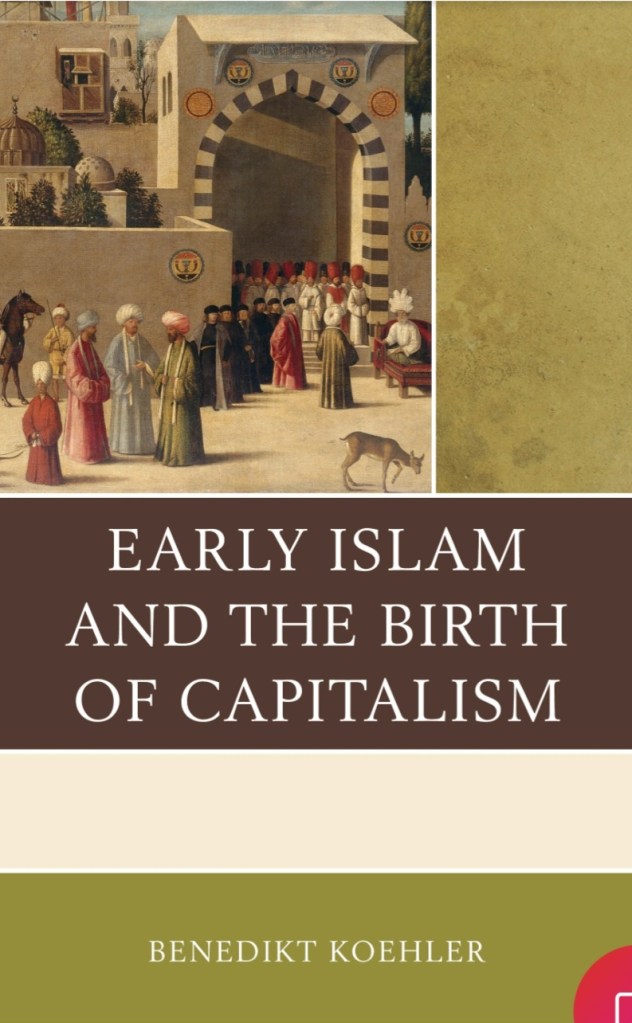
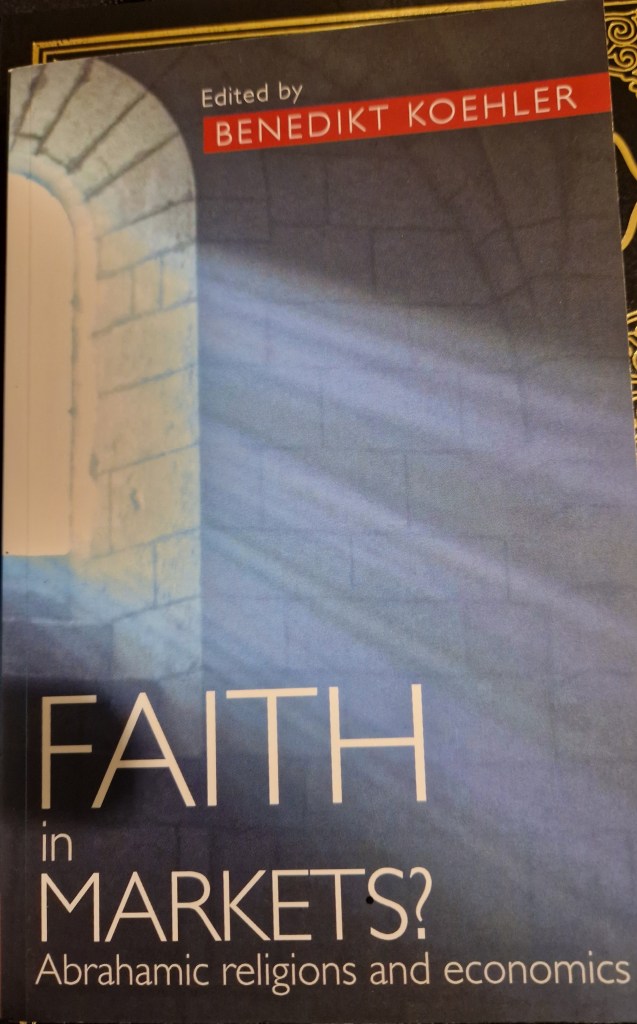
– a free webinar with Dr Benedikt Koehler, author of “Faith in Markets? Abrahamic Religions and Economics” (2023) & “Early Islam & the Birth of Capitalism” (2015)
SUNDAY 7th DECEMBER 2025, GOD-WILLING
1.30-3.00pm GMT (UK)
8.30-10.00am EST
6.30-8.00pm PAKISTAN
8.30-10.00pm INDONESIA
9.30-11.00pm MALAYSIA
CLICK HERE TO JOIN THE FREE WEBINAR VIA ZOOM
https://us02web.zoom.us/j/87686305644?pwd=LtmbB0T072jFub1NLbg7bmh3yxxDEg.1
ABSTRACT:
The Prophet Muhammad (570-632 CE) made three key contributions to economics that eventually found their way to the Western world via the Islamic world:
1) Immediately after instituting his Mosque in Madinah in 622 CE, the Prophet established a free and fair market (suq) next door, with no taxes.
2) When he was asked to fix prices in the market, he replied, “Prices are by the Hand of God.” This was said over 11 centuries before Adam Smith’s similar insight into the role of the “invisible hand” in markets.
3) The Prophet instituted the system of waqf (charitable endowment) that could not be owned by anyone, but only administered by trustees. This predated the similar development of charitable endowments around the world, and the establishment of public and private companies that were treated as a separate person in law, much like the independent waqfs. These developments have led to the explosion of global trade.
Dr Koehler’s “Early Islam and the Birth of Capitalism” (2015) proposed a strikingly original thesis—that capitalism first emerged in Arabia, not in late medieval Italian city states as is commonly assumed.
The Arabian capitalist model was perfected by the trade caravans of the Quraysh, the dominant tribe of Mecca into which the Prophet Muhammad was born. These trade caravans reached their peak during the time of Abdul Muttalib, the Prophet’s paternal grandfather.
The book especially explains the “solidarity (ilaf) of Quraysh, for the caravans of winter and summer.” (Qur’an, Surah or Chapter: Quraysh, 106:1-2)
Early Islam made a seminal but largely unrecognized contribution to the history of economic thought; it is the only religion founded by an entrepreneur.
Descending from an elite dynasty of religious, civil, and commercial leaders, Prophet Muhammad was a successful businessman before founding Islam. As such, the new religion had much to say on trade, consumer protection, business ethics, and property. As Islam rapidly spread across the region so did the economic teachings of early Islam, which eventually made their way to Europe.
Early Islam and the Birth of Capitalism (2015) demonstrates how Islamic institutions and business practices were adopted and adapted in Venice and Genoa. These financial innovations include the invention of the corporation, business management techniques, commercial arithmetic, and monetary reform. There were other Islamic institutions assimilated in Europe: charities, the waqf, inspired trusts, and institutions of higher learning; the madrasas were models for the oldest colleges of Oxford and Cambridge. As such, it can be rightfully said that these essential aspects of capitalist thought all have Islamic roots.
Dr Benedikt Koehler is a Fellow in Economics of Religion at the Institute of Economic Affairs in London.
His books include “Early Islam and the Birth of Capitalism” (2015) & “Faith in Markets? Abrahamic Religions and Economics” (2023)
WATCH A SUMMARY OF DR BENEDIKT KOEHLER’S THESIS HERE (YOUTUBE)
—
AL-QUR’AN SOCIETY (UK regd. charity 282162) classes and events are free of charge, but if you would like to support our work, please make a heart-based donation to:
AL-QURAN SOCIETY
Sort code: 204657
Account number: 60137324
SWIFTBIC BUKBGB22
IBAN GB98 BUKB 2046 5760 1373 24
Thank you for your donations: may Allah bless you.
—
─────────
Please forward this invitation to family and friends who might be interested in attending. Thank you
──────────

 AL-QURAN SOCIETY
Leave a comment